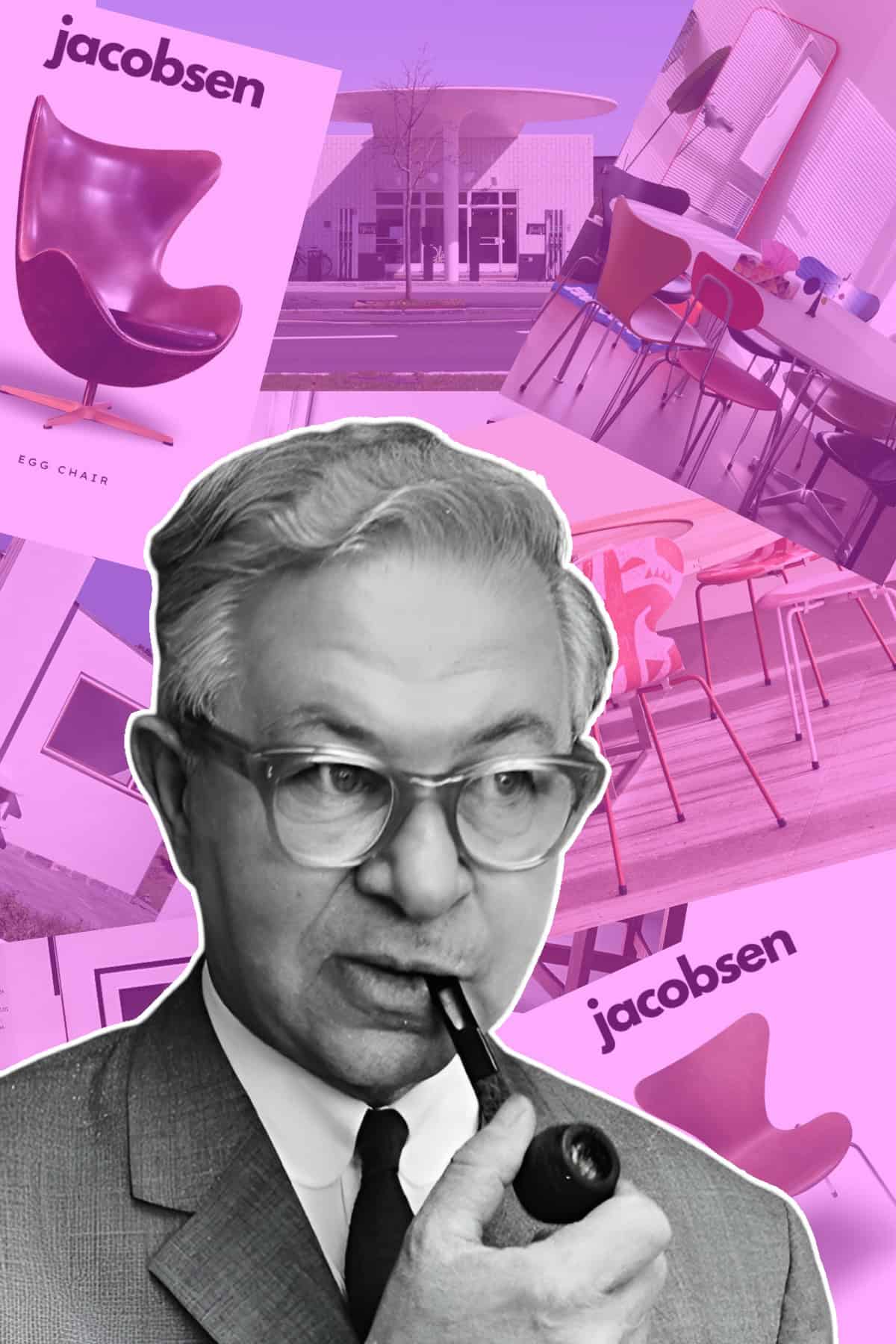
Arne Jacobsen: Iconic Chairs, Modernist Furniture & Design
Arne Jacobsen shaped the future of modernist furniture design, creating pieces that feel just as fresh today as they did in the 1950s. His work is effortlessly sleek, ridiculously stylish, and somehow still comfortable enough to make you rethink what a mid-century chair can be. Whether it’s the sculptural curves of the Jacobsen Egg Chair or the clean simplicity of the Ant Chair, his designs just get it.

Jacobsen had a way of making the futuristic feel timeless, blending Scandinavian minimalism with just enough playfulness to keep things interesting. His furniture doesn’t just sit in a space—it transforms it.
So, if you’ve ever lounged in a Swan Chair and thought, Wow, this is weirdly perfect, that’s Jacobsen doing what he did best—turning design into an experience. Fritz Hansen has kept the Jacobsen legacy alive and well. Working with Arne Jacobsen since 1934, Fritz Hansen has maintained the quality and innovative spirit going decades after his death. They were instrumental in assembling this article. Check out this short video to get a better picture:
Biography: Arne Jacobsen’s Life and Career
A Danish Design Visionary
Born in 1902 in Copenhagen, Arne Jacobsen grew up sketching, daydreaming, and—according to his family—constantly redesigning everything around him. He originally wanted to be a painter, but his practical side led him to architecture, where he could blend creativity with structure. Turns out, that was the best decision ever.

After studying at the Royal Danish Academy of Fine Arts, Jacobsen worked under architect Poul Holsøe before launching his own practice. While early on he leaned into functionalist architecture, it didn’t take long for his true talent to emerge—an intuitive sense for sculptural, organic forms that felt both futuristic and inviting.
Side note: In doing research for this article, I stumbled upon this 1961 short doc about Danish furniture making and design. I found it fascinating. Hope you do too!
Arne Jacobsen’s Architectural Masterpieces: Where Function Meets Style
Jacobsen’s design influence extends far beyond furniture. His architecture carries the same effortless modernism—clean lines, sculptural forms, and an instinct for blending function with beauty. From a sleek modernist summer house to a gas station that feels like a design statement, his buildings are just as iconic as his chairs.
Skovshoved Petrol Station (1936): The Chicest Gas Station Ever
Most gas stations are purely functional, but Jacobsen had other ideas. Built in 1936 near Skovshoved Harbour, this station is a lesson in streamlined elegance. The standout feature? A sculptural white canopy, nicknamed The Mushroom, which hovers above the pumps like a minimalist art piece. It’s a perfect example of how Jacobsen infused everyday structures with style, turning something as mundane as a petrol stop into a design moment.

Gudmindrup Summer House (1937): Mid-Century Minimalism Before It Was Cool
Long before the world obsessed over clean-lined summer retreats, Jacobsen built one of his own in 1937 on the Danish coast. Nestled in the dunes of Gudmindrup Lyng, this summer house feels effortlessly modern—even decades later. Large windows, a simple layout, and a strong connection to the landscape make it the kind of place you’d want to escape to, whether you’re into architecture or just love a peaceful, well-designed retreat.

National Bank of Denmark (1971): Modernism at Its Most Majestic
For one of his final projects, Jacobsen designed the National Bank of Denmark, completed in 1971. This building is a study in restraint—monumental without being overpowering, minimal yet rich in detail. The sleek, geometric facade and precisely crafted interiors prove that Jacobsen understood how to make a statement with simplicity. Even in an institution as formal as a bank, his approach to modernism feels inviting rather than cold.


Key Designs: Arne Jacobsen Furniture You Need to Know
The Ant Chair (1952)
At first glance, the Ant Chair seems almost too simple—just a curved plywood seat with three slender legs. But that’s exactly why it’s brilliant. Jacobsen designed it for a cafeteria, but it quickly became a symbol of Scandinavian chair design. Lightweight, stackable, and effortlessly sleek, it’s one of those pieces that works anywhere—dining rooms, offices, you name it.

The Egg Chair (1958)
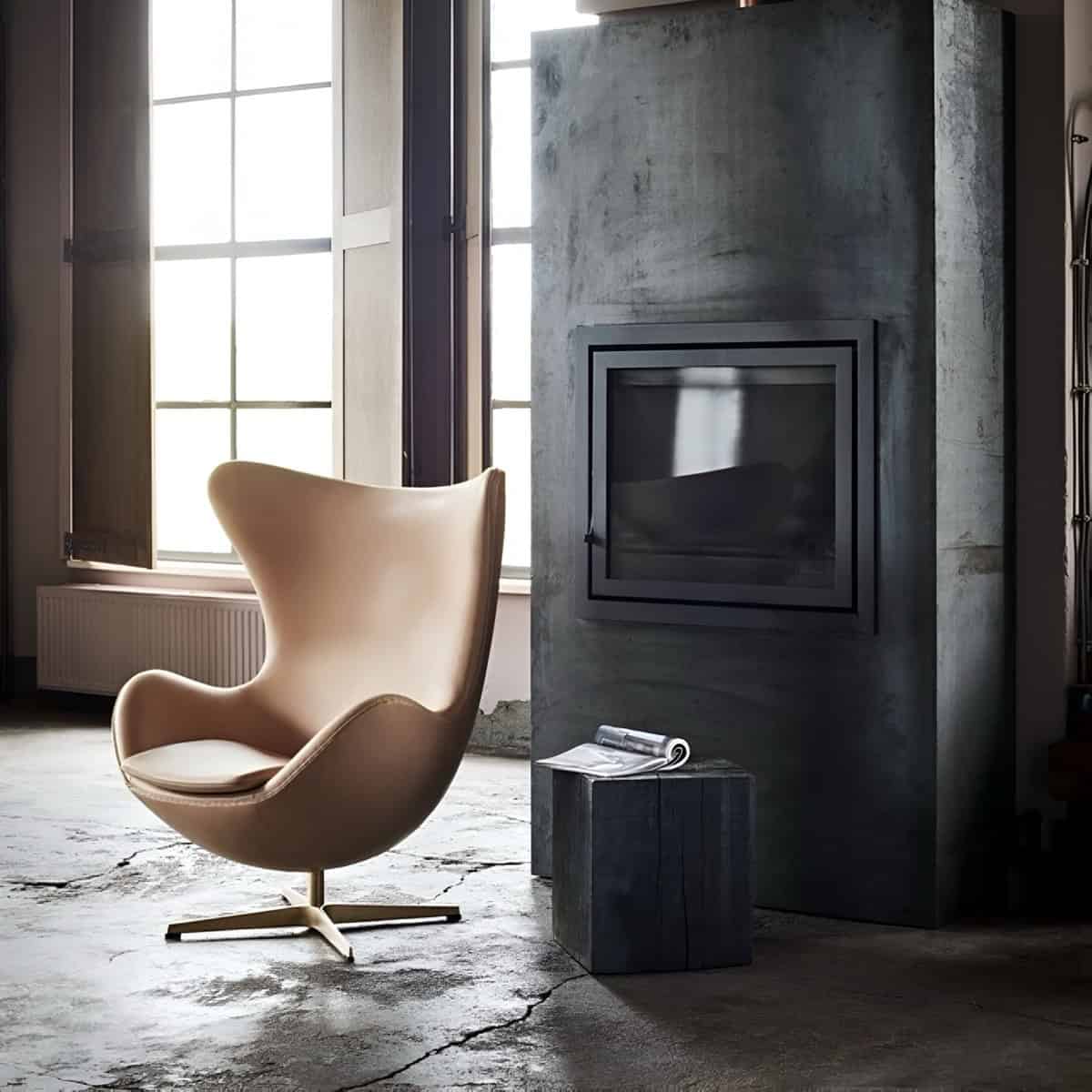
If there’s one chair that defines modernist furniture design, it’s the Egg Chair Arne Jacobsen created for the SAS Royal Hotel in Copenhagen. Designed for privacy and comfort, the sculptural form wraps around you like a cocoon, making it as much an experience as a seat. Whether in leather or fabric, the Egg Chair has remained a design icon, proving that

The Swan Chair (1958)
Designed alongside the Egg Chair, the Swan Chair offers the same organic curves but with a more open feel. Its fluid form eliminates straight lines, making it feel almost sculptural. The Swan Sofa, a larger version, carries the same soft, modernist aesthetic, perfect for those who love a statement piece that’s both stylish and inviting.

The Drop Chair (1958)
A lesser-known but equally striking creation, the Drop Chair Arne Jacobsen designed for the SAS Royal Hotel was ahead of its time. Originally produced in limited numbers, it was later reintroduced due to high demand. Its curved, teardrop-like silhouette makes it both elegant and ergonomic—ideal for modern interiors that need a touch of personality.

The Series 7 Chair (1955)
Arguably one of the most recognized mid-century chairs, the Series 7 Chair took the plywood-molding techniques of the Ant Chair to the next level. Its contoured shape and versatility have made it a staple in design-conscious homes and offices for decades. It’s proof that Jacobsen knew how to combine aesthetics with everyday function.

Incorporating Arne Jacobsen’s Designs: Interior Inspiration
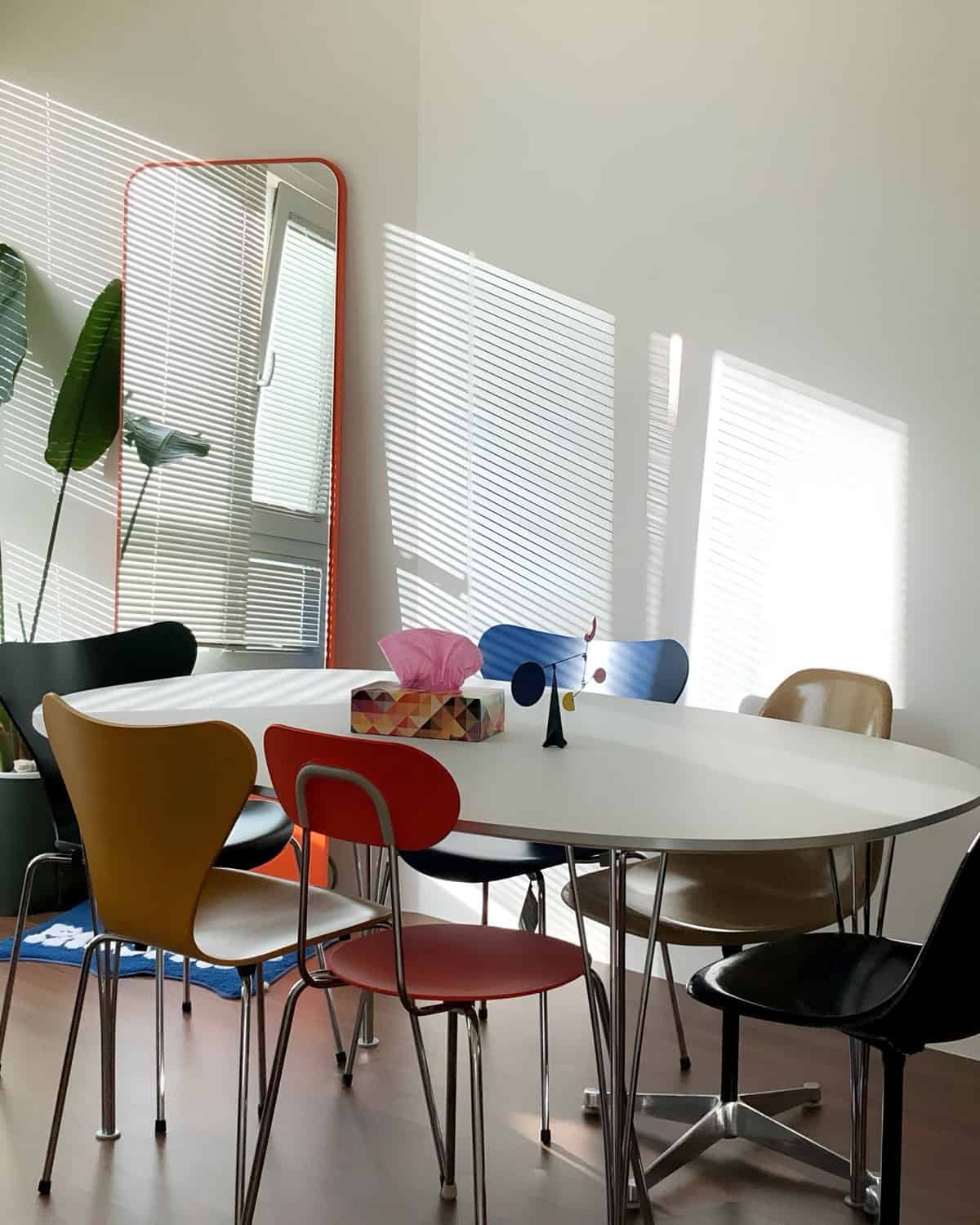
There’s a reason Jacobsen’s furniture still feels at home in the most stylish interiors today. His designs strike that perfect balance—bold yet understated, sculptural yet functional. Whether it’s a Jacobsen Egg Chair adding drama to a reading nook or a set of Series 7 Chairs elevating a dining space, his pieces have a way of blending seamlessly into modernist interiors while still making a statement.
What’s especially fascinating is how his work adapts to different styles. In Scandinavian interiors, his chairs add warmth to minimalism. In retro-inspired spaces, they bring an effortlessly cool mid-century touch. And in contemporary homes? They feel just as fresh as ever.
Below are some stunning examples of how Jacobsen’s furniture transforms interiors—proving that great design is always in style.




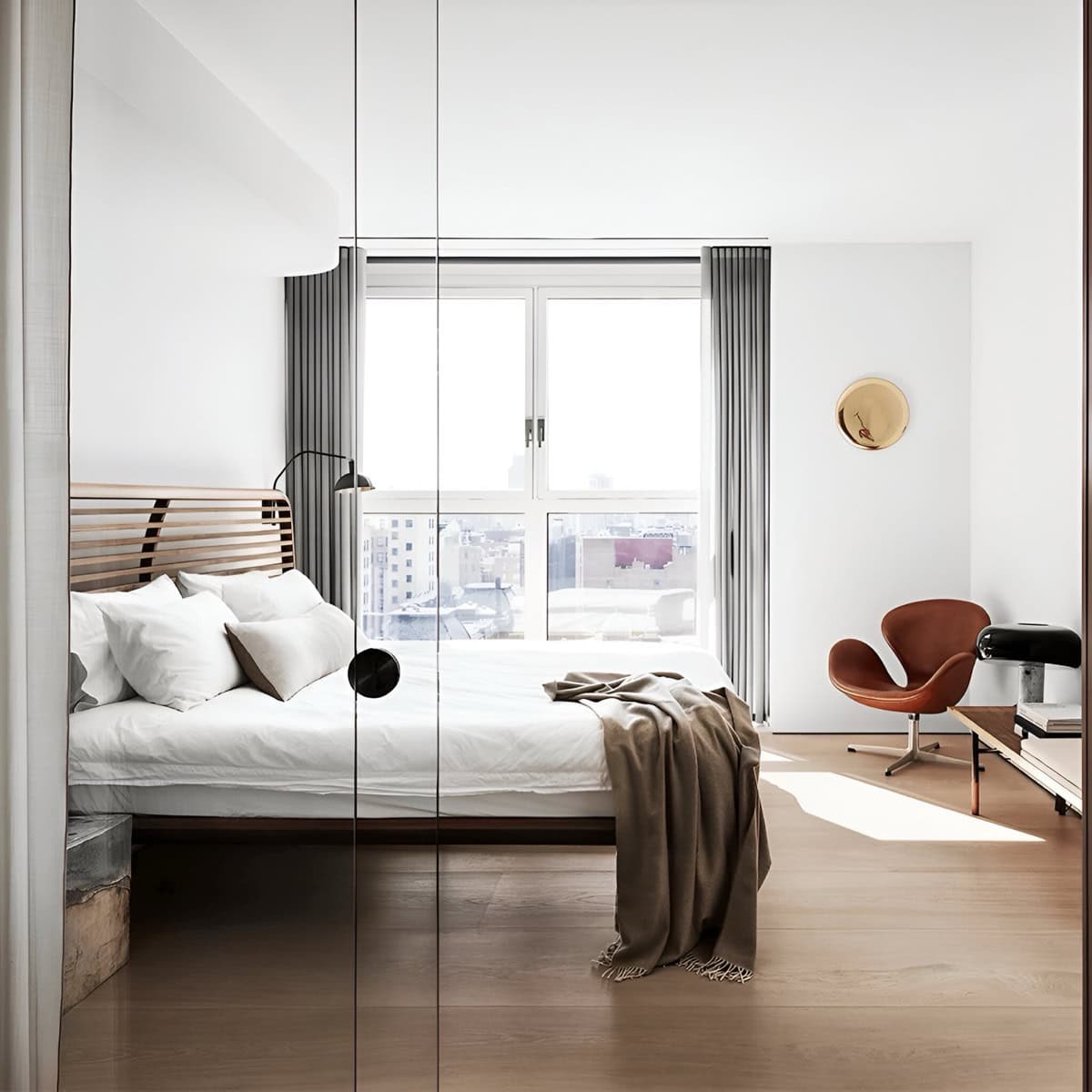


Timeline: Arne Jacobsen’s Key Highlights
- 1902: A Design Icon is Born
Arne Jacobsen is born on February 11, 1902, in Copenhagen, Denmark. His early years are filled with a fascination for drawing and design. - 1924: Architectural Beginnings
Enrolls at the Royal Danish Academy of Fine Arts, studying architecture under influential Danish modernists. - 1929: First Major Recognition
Wins a design competition for the House of the Future, a forward-thinking project that showcases his futuristic vision. - 1934: Bellavista Housing Complex
Completes the Bellavista Housing Estate, a sleek, functionalist residential project near Copenhagen, marking his early architectural success. - 1952: The Ant Chair is Born
Designs the Ant Chair, a lightweight, molded plywood masterpiece that sets the stage for his future furniture designs. - 1955: The Series 7 Chair Takes Over
Introduces the Series 7 Chair, which quickly becomes one of the best-selling mid-century chairs of all time. - 1958: The Egg, Swan, and Drop Chairs
While designing the interiors of the SAS Royal Hotel in Copenhagen, Jacobsen creates some of his most legendary furniture: the Egg Chair, Swan Chair, and Drop Chair. - 1960: SAS Royal Hotel Opens
His total design philosophy comes to life as the SAS Royal Hotel opens in Copenhagen, featuring his architecture, furniture, lighting, and even custom cutlery. - 1964: St. Catherine’s College, Oxford
Expands his influence beyond Denmark by designing St. Catherine’s College, a strikingly modern campus in Oxford, England. - 1971: A Legacy Ends
Passes away on March 24, 1971, in Copenhagen, Denmark, leaving behind a design legacy that continues to shape interiors and architecture worldwide.
Arne Jacobsen’s Enduring Legacy
Arne Jacobsen had that rare ability to make modernist furniture design feel effortless—sculptural, stylish, and somehow completely livable. His pieces shape a space in a way that feels both intentional and effortless. Whether it’s the cozy embrace of a Jacobsen Egg Chair, the clean simplicity of a Scandinavian chair, or the sculptural silhouette of the Swan Chair, his designs continue to define what timeless really means.
What makes his work even more impressive? It never feels stuck in the past. His chairs, lamps, and architectural designs blend seamlessly into everything from sleek contemporary interiors to layered, vintage-inspired spaces. They’re proof that good design doesn’t follow trends—it sets them.
Decades later, Jacobsen’s influence is everywhere. His designs appear in high-end hotels, stylish workspaces, and carefully curated homes. And whether you’re a hardcore mid-century furniture enthusiast or just someone who appreciates a beautifully made chair, his work makes one thing clear: a great design moment is always worth investing in.
Sources + More Interesting Stuff
Books of Interest:
Arne Jacobsen: Designing Denmark