
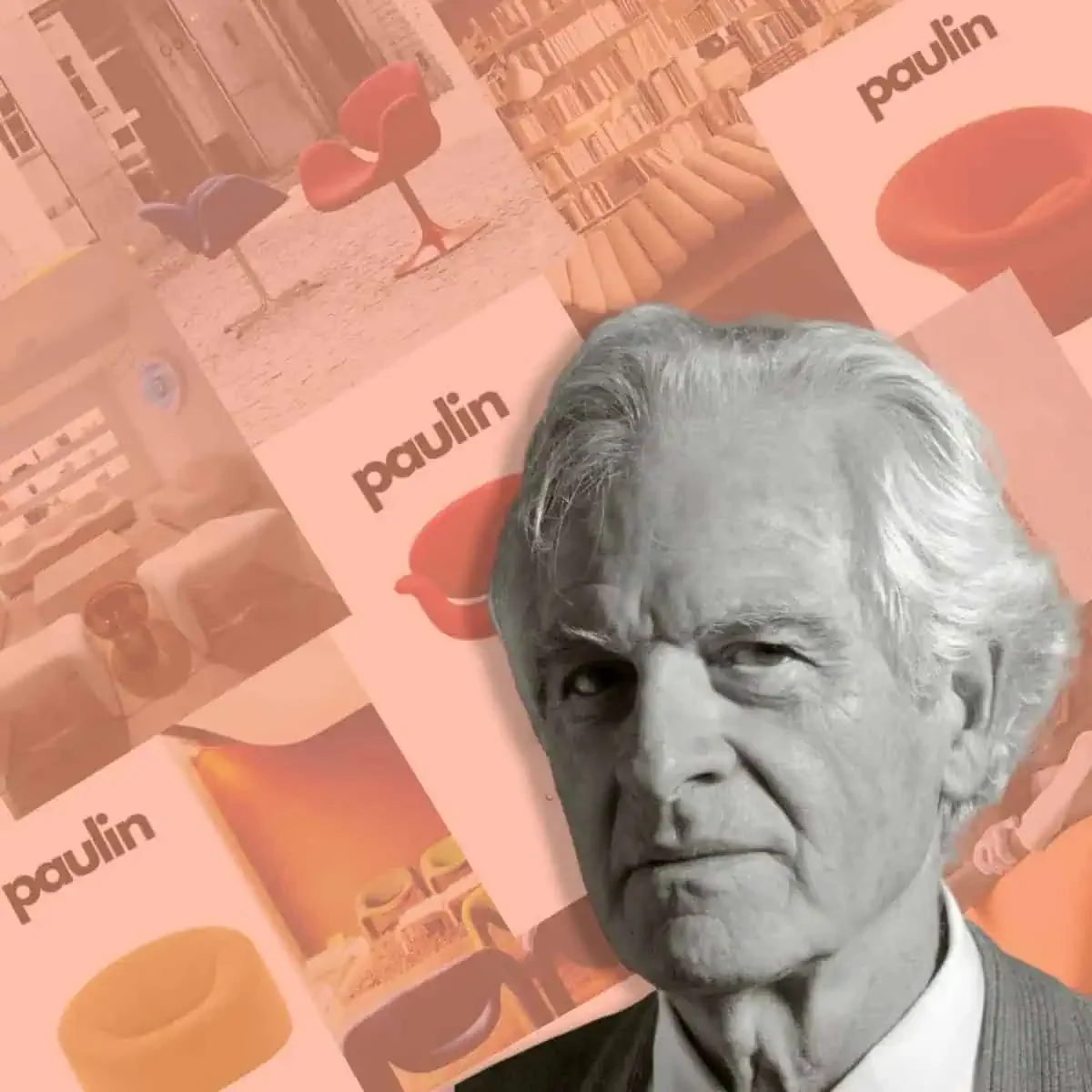
Pierre Paulin, 10 Most Celebrated Furniture Pieces
I was doomscrolling on Instagram, and bam, there he was, Frank Ocean, sitting on a sculptural Pierre Paulin sofa. I thought: what in the holy hell is that? Down the design rabbit hole I went, and here we are. Once you start spotting his designs, you see them everywhere, rounded, low, and still current. As a French designer, Paulin had a rare gift for making the future feel like home.
Pierre Paulin: The French Designer Who Made Furniture Feel Alive

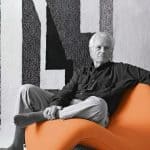
Pierre Paulin (1927–2009) was born in Paris to a French father and a Swiss mother, and he grew up around the kind of creative DNA that rewires a kid’s brain. His uncle Georges Paulin invented the Eclipse folding roof system for cars, and his great-uncle Freddy Stoll was a sculptor who drilled in one big idea: an object should hold up from every angle.

He originally aimed at sculpture, studying ceramics in Vallauris and stone carving in Burgundy, until a severed tendon in his right arm forced a hard pivot. Instead, he enrolled at École Camondo in Paris, where he bristled at the old-school teaching but thrived in hands-on, 3D thinking.
A teacher nudged him toward Marcel Gascoin’s workshop, and that’s where Paulin leveled up fast, learning the trade under someone tied to the Union des Artistes Modernes. In that orbit, he absorbed Scandinavian influence and started seeing design as something that could shape daily life, not merely decorate it.

Before he fully broke out on his own, he worked in the interior decoration service at Galeries Lafayette, which feels like the most French résumé line imaginable. By 1953, he was designing under his own name, and his career became a mix of sharp experimentation and real institutional clout.

He traveled through Scandinavia and the United States, citing Ray and Charles Eames and George Nelson as key influences. Paulin described himself as a functionalist, but with “two little drops of poetry” in the mix, which is basically the mission statement for everything of his you’d want in your living room.

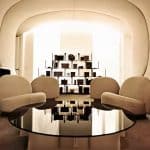
He landed major commissions, including work for the Louvre in the 1960s, and then the big one: redesigning parts of the Élysée Palace for President Georges Pompidou and later François Mitterrand.

Here’s the part I love: even with presidents in his corner, he refused to play the self-promo game. He wouldn’t write marketing copy for manufacturers, and he wouldn’t lean on his powerful patrons for introductions, because that whole vibe apparently gave him the ick.
In the mid-1970s, he and his wife, Maïa Wodzislawska-Paulin, founded an industrial design firm. When it was later sold to a French communications agency, now Havas Worldwide, Paulin retreated to the Cévennes mountains in southern France. He poured himself into designing and building a country house and landscape, described as his final masterpiece.
He died on June 13, 2009.
Pierre Paulin, 10 Most Celebrated Furniture Pieces and Their Stories
From low-slung curves to sculptural comfort, Paulin’s designs became instant conversation pieces. Here are ten of his most celebrated designs, in chronological order, each with a little “wait, really?” history attached.
Mushroom Chair (1960)

Did you know it was one of Paulin’s first foam-over-frame experiments?
By stretching fabric over a foam-padded frame, Paulin achieved a low-slung silhouette that felt both futuristic and warm — and established the construction method he’d return to again and again.
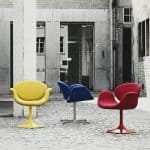
Orange Slice Chair (1960)

Did you know its appearance changes from every angle, almost like it’s opening and closing?
Two arcing halves cradle the sitter in a form that shifts from crescent to citrus slice depending on where you stand. Produced by Artifort, it remains one of the most photographed chairs of the twentieth century.
Ribbon Chair (1966)

Did you know it’s part of the permanent collections of both the Museum of Modern Art and the Centre Pompidou?
A single ribbon of foam-covered fabric loops from floor to backrest with no seams or joints — just one unbroken gesture. Its place in MoMA and the Centre Pompidou cements it as furniture that crossed into sculpture.
Tongue Chair (1967)

Did you know its wave shape was inspired by the human tongue, giving it both its name and organic form?
A low, rolling wave of a seat that rejected the idea of furniture looking like furniture. Its bright, candy-colored upholstery made it an instant icon of late-1960s Pop optimism.
F300 Chair (1967–1968)

Did you know it was one of the first to use an injection-molded shell, and today it’s reissued with a recycled polymer?
One of Paulin’s most process-driven designs, the F300 used injection-molding to achieve a precision foam-over-frame couldn’t match. Its modern reissue in recycled polymer adds an unlikely sustainability footnote.
Dune Ensemble (1968–1972)

Did you know it wasn’t produced at the time, and only resurfaced decades later, turning into a modern collector obsession?
Too radical for manufacturers of its era, this landscape of interlocking modular elements sat in drawings and prototypes for decades. When it finally reached limited production, collectors took notice immediately.
ABCD Sofa (1968)

Did you know it was prototyped, then shelved during the 1970s oil crisis, and revived decades later?
Four modular elements that could be arranged in any configuration — a prescient idea, but one the oil crisis killed before it could launch. Its revival is now seen as a vision of flexible domestic space ahead of its time.
Pumpkin Chair (1971)

Did you know it was designed for Georges Pompidou’s private apartments at the Élysée Palace, then reissued by Ligne Roset in 2008?
Born in the heart of the French state, its deeply quilted, globe-like form suggests both luxury and playfulness. Ligne Roset’s 2008 reissue brought it to the public for the first time.
Élysée Seating (1972)

Did you know it was created for the Élysée Palace and later reissued in 2015?
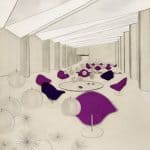
Designed for a president who genuinely loved contemporary design, this low and generous collection made modernism feel at home in a palace. Its 2015 reissue renewed interest in Paulin’s presidential chapter. Can we all admit that the French are always ahead of the curve?
Tapis-Siège (1973)

Did you know it was inspired by Japanese tatami, and returned decades later through Paulin’s estate?
Part rug, part seat — Paulin collapsed the boundary between floor and furniture entirely. Drawn from the tatami tradition, it anticipated the floor-living aesthetic by decades, and feels just as radical today.
How to Use Pierre Paulin Furniture in Interiors
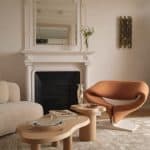
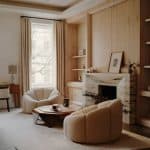
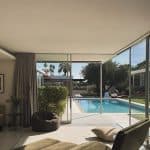
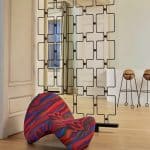
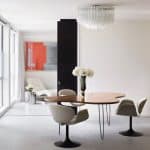
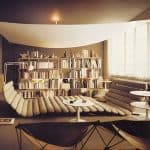
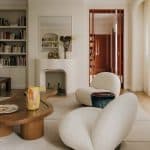
I’ve scoured the interwebs and the socials and found inspo for you on how people are using Pierre Paulin furniture in real rooms, so you can steal a few ideas for your own space.


Pierre Paulin Timeline
- 1927: Born in Paris.
- Studies (pre career pivot): Trains in ceramics in Vallauris, then stone carving in Burgundy, with sculpture as the original goal.
- Career pivot: A severed tendon in his right arm pushes him toward design, and he enrolls at École Camondo in Paris.
- Early training: Joins Marcel Gascoin’s workshop and learns the trade as an apprentice.
- Before 1953: Works in the interior decoration service at Galeries Lafayette.
- 1953: Begins creating furniture under his own name.
- 1960s: Lands major commissions, including furniture for the Louvre.
- 1968: Plans a modular “Action Office” inspired home system with Herman Miller.
- Early 1970s: The Herman Miller program is abandoned due to the oil crisis.
- 1972: Commissioned by President Georges Pompidou and Claude Pompidou to create an installation for the Élysée Palace.
- Mid 1970s: Founds an industrial design firm with his wife, Maïa Wodzislawska-Paulin.
- 1975: Designs the Pacha Lounge Chair.
- Later years: After the firm is sold to a French communications agency, now Havas Worldwide, he retreats to the Cévennes mountains and designs a country house and landscape.
- 2009: Dies at age 81.
- 2014: The abandoned 1968 modular program is produced for the first time by Paulin Paulin Paulin.
Back to the Doomscroll
So yeah, that Frank Ocean doomscroll moment turned into a full-on Pierre Paulin spiral, and I’m not mad about it. Paulin had this rare talent for making modernist furniture design feel human: soft, sculptural, and genuinely comfortable, while still staying sharp as design.
If you’re bringing one Paulin piece into your space or building a whole room around one, the idea stays simple. Prioritize shape. Prioritize comfort. Let the curves do the work. Next time you’re doomscrolling and you spot a low, rounded silhouette that looks like it’s breathing, you’ll know exactly what you’re looking at. And you may end up right back down that rabbit hole.
Sources
AnOther Magazine, “A Guide to the Futuristic Furniture of Pierre Paulin”
Paulin Paulin Paulin, “Pierre Paulin Action House”
Judd Foundation, “Pierre Paulin Action House”
Domus, “Pierre Paulin and radical domestic design”
Architectural Digest, “The Story Behind Pierre Paulin’s Iconic Pumpkins”
Architectural Digest, “Frank Ocean’s Pierre Paulin sofa”
MoMA Collection, “Ribbon Chair (model 582)”
Mobilier national, “Les salons Paulin, les salons de l’Élysée”


