
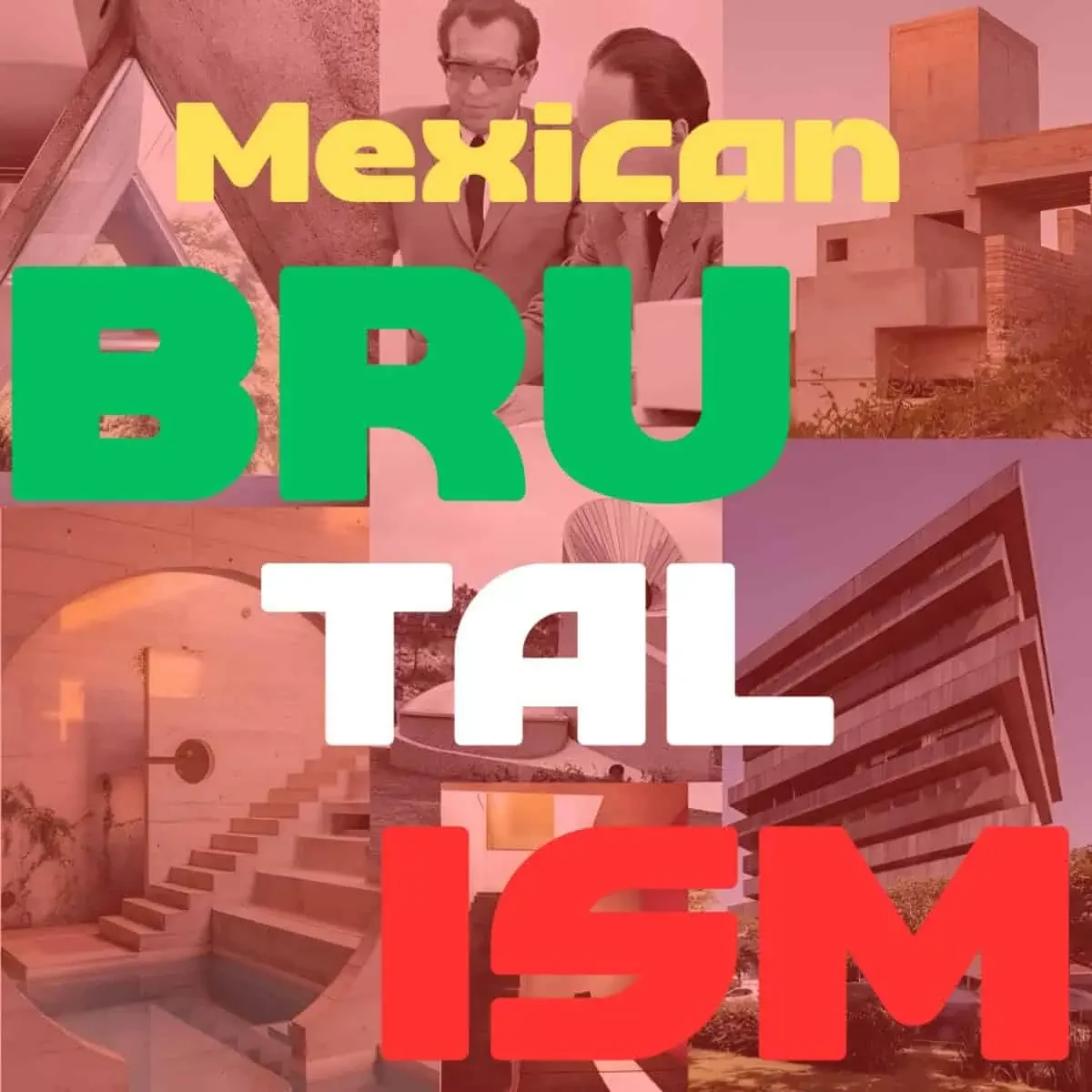
Mexican Brutalist Architecture: Buildings and Architects
The first time you stand in front of a big Mexican Brutalist building, it feels a bit like walking up to a cliff. Concrete, sun-bleached and blunt, throwing hard shadows across the sidewalk.
It should feel cold. It doesn’t. Plants spill over parapets, people cut through courtyards, kids ride scooters under massive overhangs.

Brutalism has a reputation for being severe in the U.S. and Europe. In Mexico, that same love of raw concrete runs through a different lens: pre-Hispanic geometry, intense light, and a long tradition of treating architecture as landscape.
The result is a version of Brutalism that can be tough and monumental, but also warm, strange, and a tad theatrical.
This piece is a short guide to that world: what people mean when they say “Mexican Brutalism,” which architects shaped it, and a few buildings worth putting on your list for the next time you land in CDMX or head toward the coast.
What We Mean by “Mexican Brutalism”
Classic Brutalism grew out of modernism. The name comes from the French term béton brut—raw concrete, and the usual ingredients are exposed structure, repetitive geometry, and a refusal to hide how a building is made.
In Mexico, the same toolkit shows up, but the reference points shift. Heavy forms echo pyramids, platforms, and ceremonial stairs as much as mid-century office blocks.
Writers sometimes describe a kind of “double” Brutalism here: tuned to international modernism and at the same time pulled toward Aztec and Mayan spatial ideas.
Courtyards, covered walkways, and carved-out voids keep interiors cool and frame small pockets of landscape. Mass becomes a backdrop for vegetation.
In many recent projects, concrete pairs with local stone, wood, and stucco that pick up the colors of the soil or jungle. That mix softens the stereotype of Brutalism as purely harsh or bunker-like.

Taken together, “Mexican Brutalism” isn’t a single manifesto. It’s a family of buildings that use exposed concrete and graphic forms, tuned to Mexican cities, landscapes, and histories.
How Brutalism Took Root in Mexico (1960s–1980s)
In the 1960s and 70s, Mexico was building fast. New universities, cultural centers, ministries, and housing blocks needed to go up on limited budgets and tight timelines.
Concrete fit the moment. It could be poured on site, handled local conditions, and move from flat slabs to sharp angles and deep overhangs without changing materials.
Architects were watching international modernism evolve. They saw late Le Corbusier, postwar European housing, and big civic projects in Latin America.

At the same time, Mexico already had a strong tradition of weighty, sculptural buildings. Pre-Hispanic sites, colonial churches, and early modern work by architects like Luis Barragán had normalized thick walls, courtyards, and strong shadows.
Brutalism arrived in that mix. The result in Mexico was less glass and steel office towers, more heavy, stepped forms for museums, schools, and state institutions.
By the 1980s, you can see a full spectrum. Severe ministries on one side; experimental houses and studios on the other.

Architects to Know
Teodoro González de León and Abraham Zabludovsky
These two worked separately and together, and their projects line many of the main avenues in Mexico City.
Their buildings tend to sit low and wide. Long concrete walls, deep cuts, and stepped terraces anchor projects into the ground.

They often used bush-hammered concrete. That rough surface catches light, brings out the aggregate, and gives walls a stone-like texture instead of a slick, smooth finish.
Museums, office complexes, and housing blocks from this duo often feel like slices of landscape. You move along ramps and stairs rather than through a simple front door.

Agustín Hernández Navarro
If you want Brutalism that borders on science fiction, Agustín Hernández is the name to learn. (*Make sure to check out the video posted earlier in this article!)
His houses and studios lean into dramatic gestures. Think staircases that jut into space, volumes that cantilever over ravines, and facades that read almost like armor.

He pulls heavily from pre-Hispanic forms. Triangles, trapezoids, and stepped profiles nod to pyramids and ceremonial platforms, even when the project is a small urban house.
Inside, spaces wrap around double-height voids and tight bridges. You never feel like you are in a simple box; every turn shifts the view and the sense of scale.

Pedro Ramírez Vázquez
Pedro Ramírez Vázquez is usually filed under modernism, but many of his later works sit close to Brutalism in spirit.
He worked on major civic projects: museums, stadiums, and government buildings that had to carry symbolic weight as well as serve daily life.

His use of concrete tends to emphasize rhythm and repetition. Structural frames, recessed panels, and colonnades create strong patterns of light and shadow.
You can read his work as a bridge. Earlier modernist clarity meets the heavier, more monumental language that later architects develop further in pure Brutalist terms.
Where to See Mexican Brutalism in Mexico City
Museo Tamayo
Low, stepped concrete terraces tucked into Chapultepec, half museum, half landform.

Auditorio Nacional
Huge canopy, deep overhangs, and a long, graphic façade facing Reforma.

Palmas 555
An office tower that seems to shift as you move, with stepped floors and shaded bands of glass.

Escuela de Ballet Folklórico de México
Trapezoids and sharp angles that hint at pyramids and stage sets.

Praxis House
Agustín Hernández’s own home and studio, more like a suspended concrete sculpture than a typical house. (Yes, I am a bit obsessed)

Brutalism in the Mountains and Countryside
On the Oaxacan coast, Brutalism trades smog for sea air.
Concrete stays exposed but opens up to breeze, shade, and views. Thick walls, arches, and platforms frame pools and courtyards instead of plazas and streets.
Small hotels like Casa TO, Hotel Terrestre, and the concrete stretches of Casa Wabi use the same language—raw structure, strong geometry—but soften it with water, plants, and sky.


From City to Coast: “Tropical Brutalism”
In the mountains, concrete becomes a way to stitch houses into steep slopes.
Valle de Bravo and similar regions are full of low, horizontal pavilions in pigmented concrete, half-buried in the terrain, with long retaining walls and deep terraces.
These projects feel quieter than the city institutions, but the idea is similar: use mass, shadow, and earth tones to lock the building into its landscape.
You also see this language in more recent houses like Casa Alférez, Ludwig Godefroy’s concrete retreat set in a pine forest outside Mexico City. A low, bunker-like volume, internal courtyard, and stark concrete walls frame shafts of light and trees, so the house feels half shelter, half clearing in the woods.

Wrap-Up
Mexican Brutalism takes a global language and plugs it into local histories, climates, and daily routines.
The result is less bunker, more backdrop: for trees, for people, for light and shadow moving across the day.
Once you start noticing it in Mexico, you see it everywhere: in museums, in coastal retreats, in hillside houses, and in the way concrete keeps getting re-used as a way to draw the line between sun, earth, and sky.