Skip to content
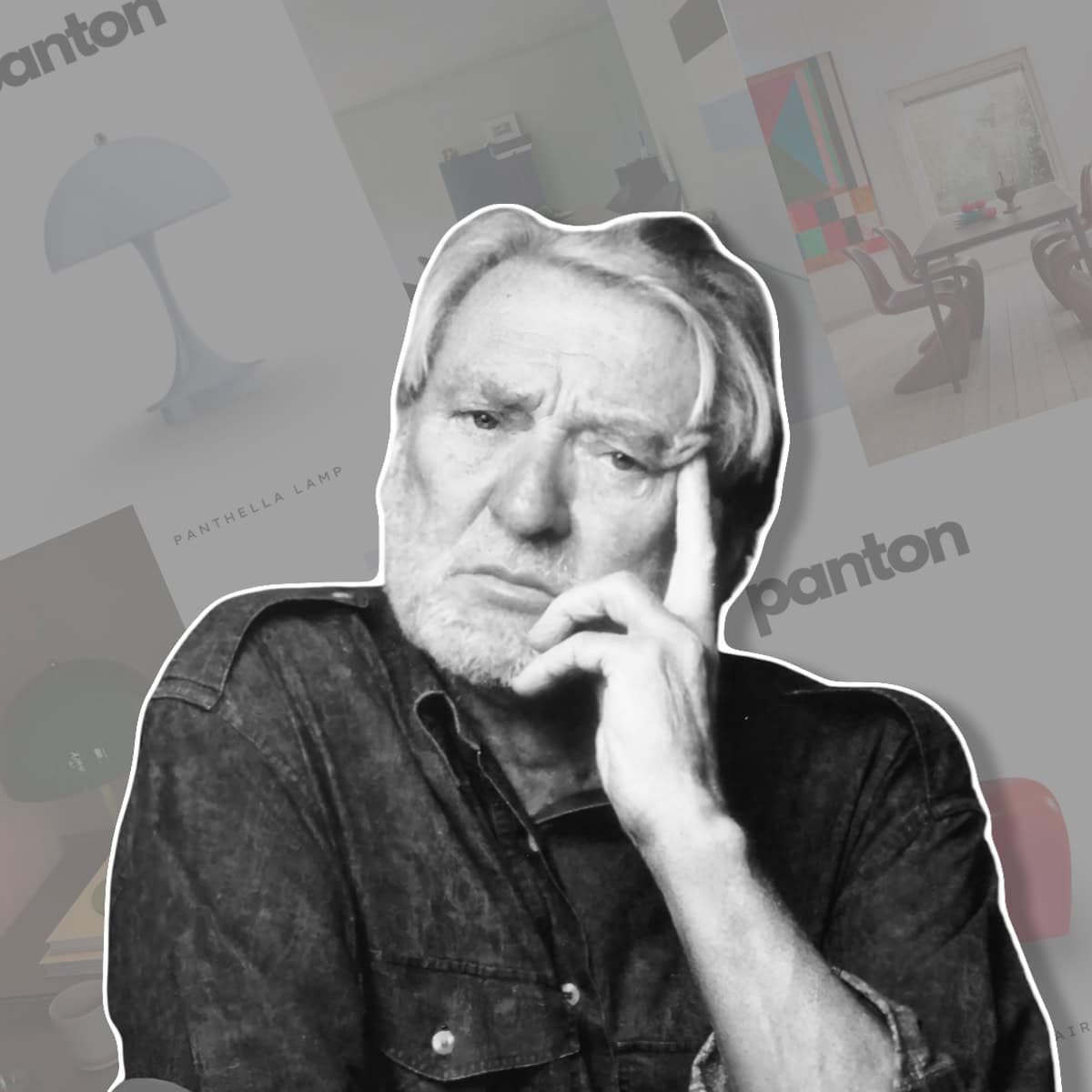




Verner Panton Furniture and Chair Design History
One of the first movies I ever saw in a theater was The Spy Who Loved Me. I was very small, the screen felt impossibly huge, and that opening sequence pretty much rearranged my brain chemistry. The thing that lodged itself in my memory wasn’t the car or the gadgets. It was a room. (Ok, and maybe that first ski chase scene)
When we first meet Stromberg in his undersea lair, he’s sitting on this modular, serpentine seating console, all chrome curves and cushioned segments. The whole set looks like a villain’s living room on another planet. Somewhere in that same stretch of scenes, Jaws appears with his steel teeth, and tiny me is trying to process both the bad guy and the furniture at the same time.

I didn’t know the name Verner Panton then. I didn’t know that the modular snake of metal and upholstery was the Pantonova seating system, or that someone had actually designed it for a real restaurant long before it landed in a Bond film. I just knew that room felt different from anything else I’d seen. The seating didn’t hug the wall. It curled through the space like a sculpture and turned the whole lair into a stage.
Years later, once I started paying closer attention to mid-century design, I kept seeing those same curves. The S-shaped chair in fashion shoots. The double-dome lamp in saturated colour hanging over a dining table. The soft, glowing floor lamp that looks like a friendly mushroom in the corner of a bedroom. Piece by piece, the set from my childhood memory started to come into focus, and there he was at the centre of it all: Verner Panton.
This piece is my way of connecting those dots. Who was this color-drunk Danish designer who thought furniture should feel at home in a spaceship? What did he actually make, beyond that one villain’s sofa and the famous plastic chair? And why do his shapes keep slipping into interiors, movies, and Instagram feeds decades after he designed them?
Let’s start with the person behind all those curves.
Verner Panton Biography – From Funen to Full-Color Rooms
Verner Panton was born in 1926, in Gamtofte, a small town on the Danish island of Funen.
He grew up in a country that treated well-crafted wooden furniture almost like a national sport.
He trained first at a technical college in Odense.
Then he moved to Copenhagen to study architecture at the Royal Danish Academy of Fine Arts.
In the early 1950s, he worked in Arne Jacobsen’s office.
Those years gave him a front-row seat to careful, elegant Danish modernism.

By 1955, he opened his own studio.
Once he was on his own, the work shifted toward stronger colour, plastics, and experiments that looked nothing like polite teak chairs.
Through the late 1950s and 1960s, he designed chairs, lamps, textiles, and entire interiors.
He treated walls, floors, ceilings, and furniture as one continuous composition, often in a single saturated hue.
The 1970s brought more large-scale projects.
Modular seating systems, sculptural lamps, and theatrical exhibition spaces turned his ideas into full environments.
In his later years, he kept working, teaching, and consulting.
By the time he died in 1998, in Copenhagen, his place in twentieth-century design history was secure, even if most people still recognise him first through one plastic chair and a handful of lamps.
Verner Panton’s Design Style and Use of Colour
Verner Panton came out of the same Danish modern world as his peers, but he aimed his work in a very different direction. While other designers were refining timber, joinery, and woven seats, he chased plastics, steel, foam, and glossy finishes that felt closer to industrial design and set design than to cabinetmaking. Chairs, lamps, and textiles were all part of the same experiment.
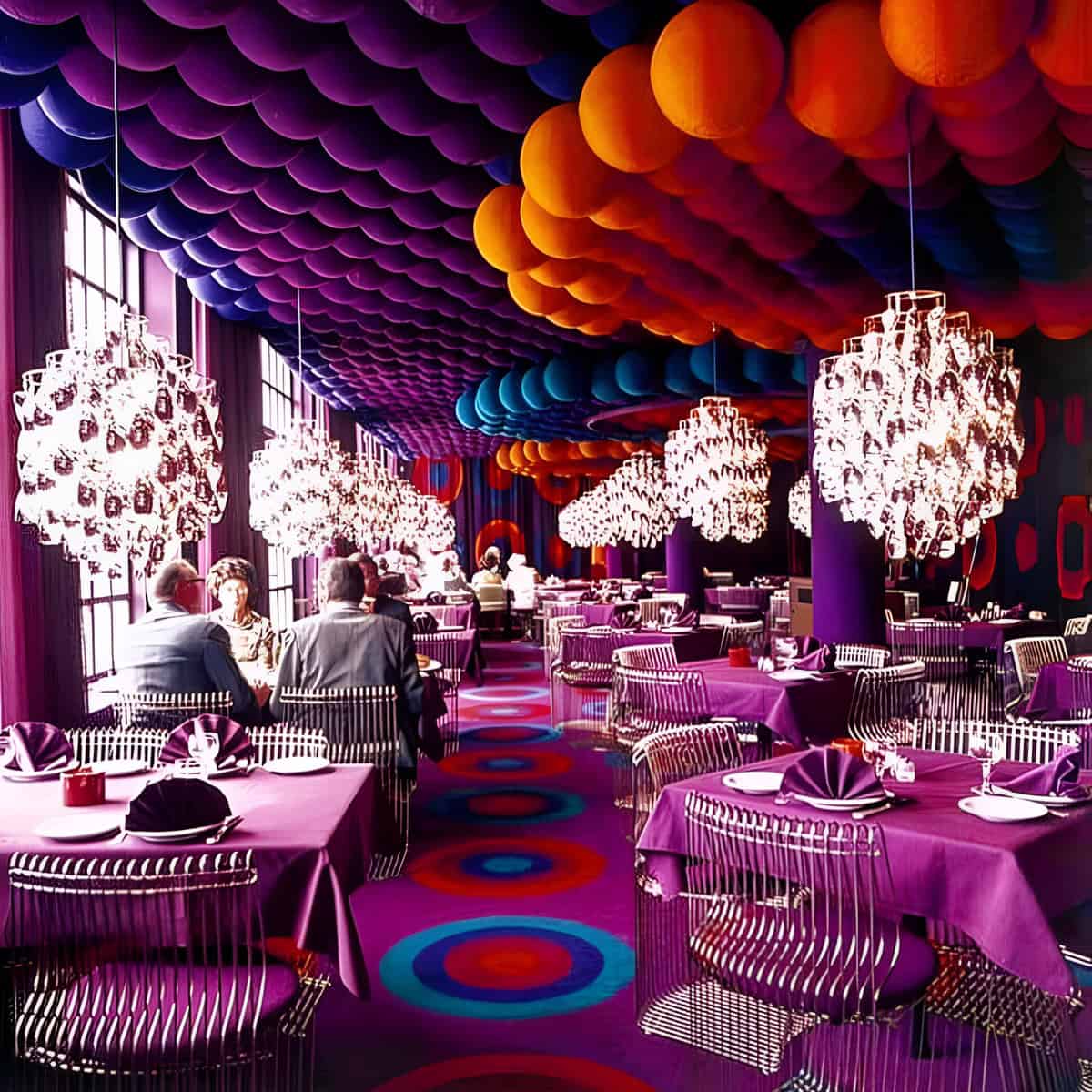
Colour was the constant. He returned to the same saturated reds, oranges, yellows, and blues, often running them across an entire interior—floors, walls, ceilings, furniture, and lighting in one family, so you feel like you’re standing inside the colour rather than just looking at a bright object in a neutral room.

He also thought in systems. Seating that could bend along a wall or break into clusters. Lamps where the base and shade were shaped to bounce light around the space. Textile patterns that echo the same curves and circles you see in his furniture. On their own, the pieces read as strong objects. Grouped together, they start to behave like architecture, changing how a room works and how you move through it.
Major Verner Panton Furniture and Lighting Designs
Panton Chair (1967)
First produced in 1967 by Vitra after nearly a decade of sketching and full-scale prototypes.
It’s the single-piece, S-shaped plastic chair that runs from floor to seat to back in one continuous curve.
Panton once carved a life-size version out of polystyrene foam and lugged it around to convince manufacturers it was even possible, and some of the earliest fibreglass versions aged so unpredictably that collectors now hunt for their colour shifts and surface quirks as proof of an early batch.

Cone Chair (1958)
Designed in 1958 for a restaurant in Denmark, it later moved into wider production as a standalone lounge chair.
The seat is literally a cone set on a steel swivel base, wrapped in fabric so it feels sharp and soft at the same time.
When a store in New York placed one in the window, it pulled so much attention from drivers on the street that it was reportedly asked to be removed because it was causing traffic trouble.

Heart Cone Chair (1959)
Created in 1959 as a more dramatic evolution of the Cone Chair.
The sides rise and flare into a loose heart shape, with wing-like curves that wrap slightly around the sitter.
Early press photos showed it with models draped over those wings, and the chair picked up a reputation for being too theatrical for cautious clients, which only helped its status in the design world.

Flowerpot Lamp (1968)
Designed in 1968 and originally produced in lacquered metal, it has since been reissued by several Danish brands.
Two nested hemispheres form the shade, with the smaller dome hiding the bulb and the larger one throwing light down in a gentle pool.
The name and the bright colours were a direct nod to the late-1960s youth movement, and early versions were as likely to hang in bars and club interiors as in living rooms.

Panthella Lamp (1971)
Introduced in 1971 with Louis Poulsen, as both a floor and table lamp.
It has a round base and a dome shade that work together so the light reflects off the base and the inside of the shade before it reaches the room.
Panton was aiming for a glow that felt even and soft rather than a harsh spotlight, which is why so many interiors use Panthella in bedrooms and corners where you want light but no glare.

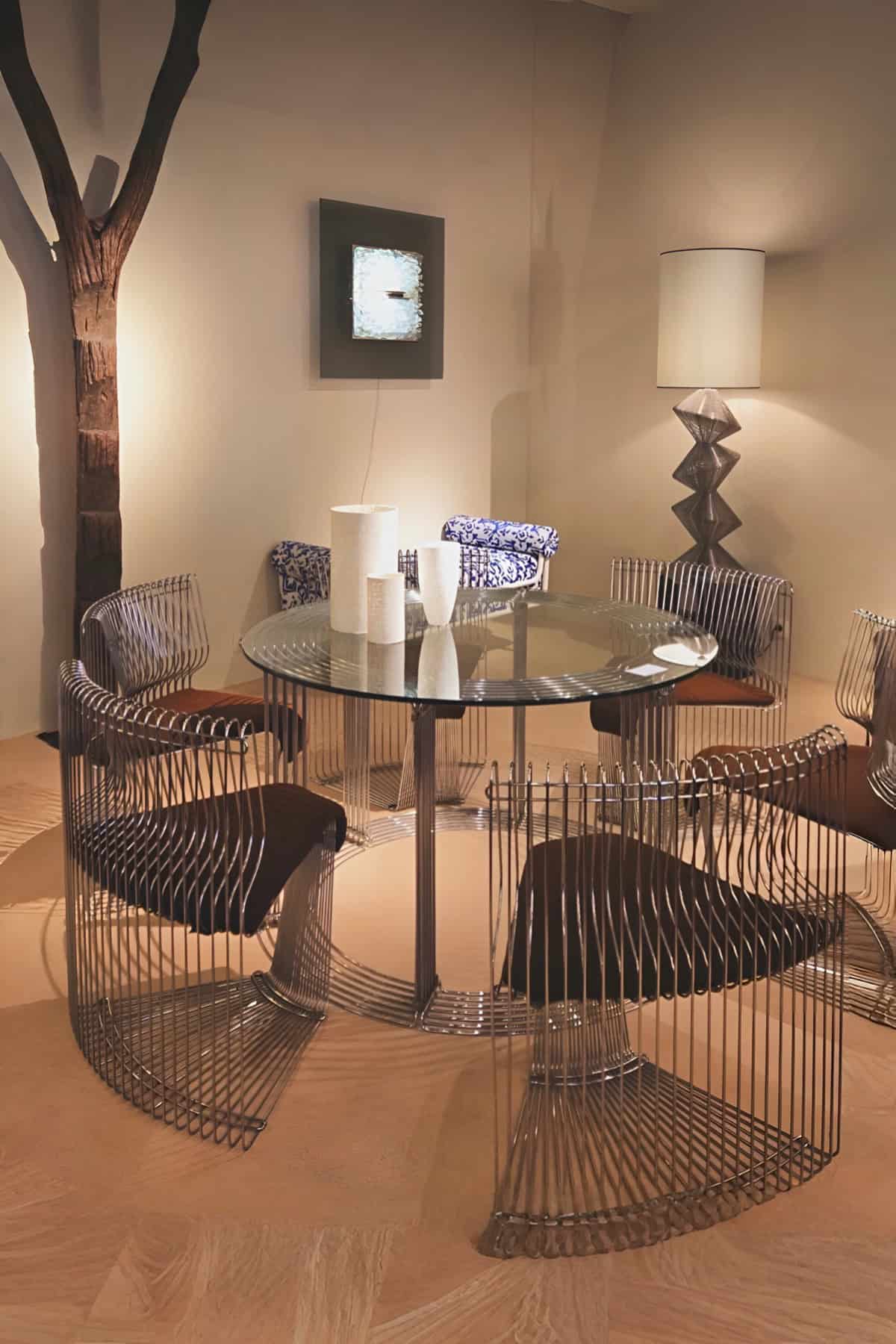
Pantonova Seating System (1971)
Also from 1971, originally designed as a modular seating system for a restaurant in Aarhus.
Each section is a wire frame with a slim cushion, and the linear, concave, and convex modules can link into long snakes, circles, or separate clusters.
Its most famous cameo is in The Spy Who Loved Me, where Karl Stromberg’s lair is furnished with Pantonova, so (for me) every time it shows up in a contemporary project it carries a bit of Bond-villain energy with it.

Verner Panton in Interiors Today
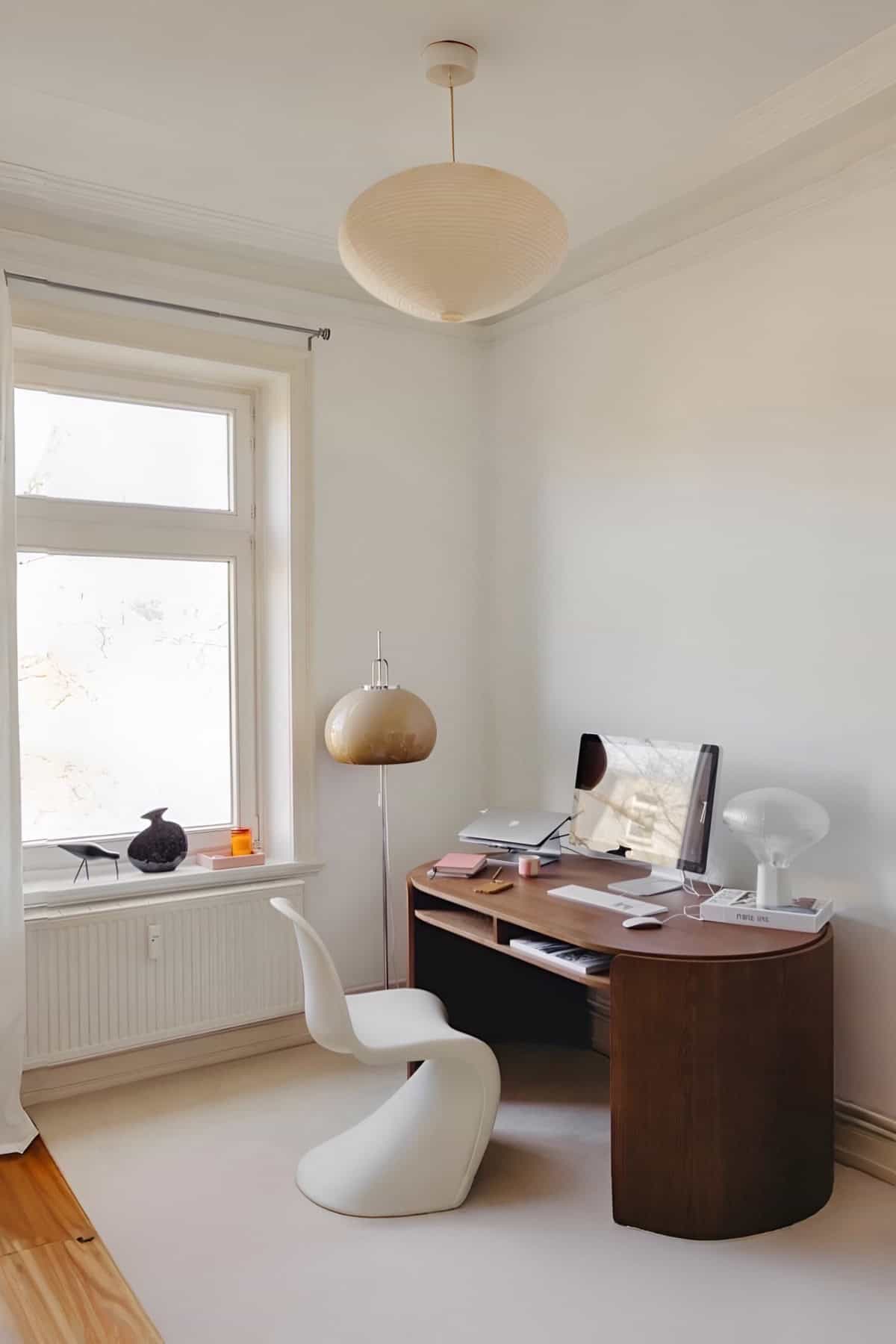
Verner Panton helped invent the villain lair of my childhood, but his furniture is now living very real lives in very real homes. So I scoured the interwebs and socials for rooms where people are actually using Panton chairs, lamps, and that famous Pantonova curve—not in a museum or on a movie set, but next to radiators, kids’ toys, and half-read books.
My hope is that seeing these spaces sparks ideas for your own place—maybe it’s one strong chair, a small hit of colour, or a single lamp that shifts the mood of a corner you walk past every day.



Verner Panton Timeline – Key Dates and Designs
- 1926 – Born in Gamtofte, on the Danish island of Funen.
- Late 1940s – Trains at a technical college in Odense, then studies architecture at the Royal Danish Academy of Fine Arts in Copenhagen.
- Early 1950s – Works in Arne Jacobsen’s office and gets a close look at Danish modernism from the inside.
- 1955 – Opens his own design studio.
- 1958 – Designs the Cone Chair.
- 1959 – Follows with the Heart Cone Chair.
- Mid-1960s – Develops full-scale prototypes and early versions of the Panton Chair.
- 1967 – The Panton Chair goes into serial production with Vitra.
- 1968 – Designs the Flowerpot Lamp.
- 1971 – Introduces the Panthella Lamp with Louis Poulsen and the Pantonova seating system; works on large interior and exhibition projects.
- 1980s–1990s – Continues to design interiors, products, and exhibitions as museums and books start to frame his work as key to late twentieth-century design.
- 1998 – Dies in Copenhagen; reissues, retrospectives, and a growing collector base carry his work to a wider audience.
From Bond Lairs to Real-Life Rooms
Every time I rewatch The Spy Who Loved Me and see Stromberg, his villainous ass parked on that Pantonova snake, it feels a little less like a fantasy set and a little more like a Verner Panton mission statement. Curved metal, modular seats, and colour turning a room into a stage—that’s the blueprint he kept returning to, just translated for homes, restaurants, ships, and galleries instead of villain lairs.
Most of us are not decorating an undersea hideout, but the same ideas filter into everyday spaces. A single Panton Chair pulled up to a dining table, a Flowerpot lamp over the kitchen counter, a Panthella glowing in the corner of a bedroom—each one borrows a bit of that drama and makes a regular room feel charged.
The thing that hooked me as a kid still applies now: Panton’s work changes how a space feels before you even sit down. If you see one of his pieces and catch yourself staring for a second, that tiny pause is the point. It’s the moment where a chair or a lamp stops being background and starts telling you what kind of room you’re in.