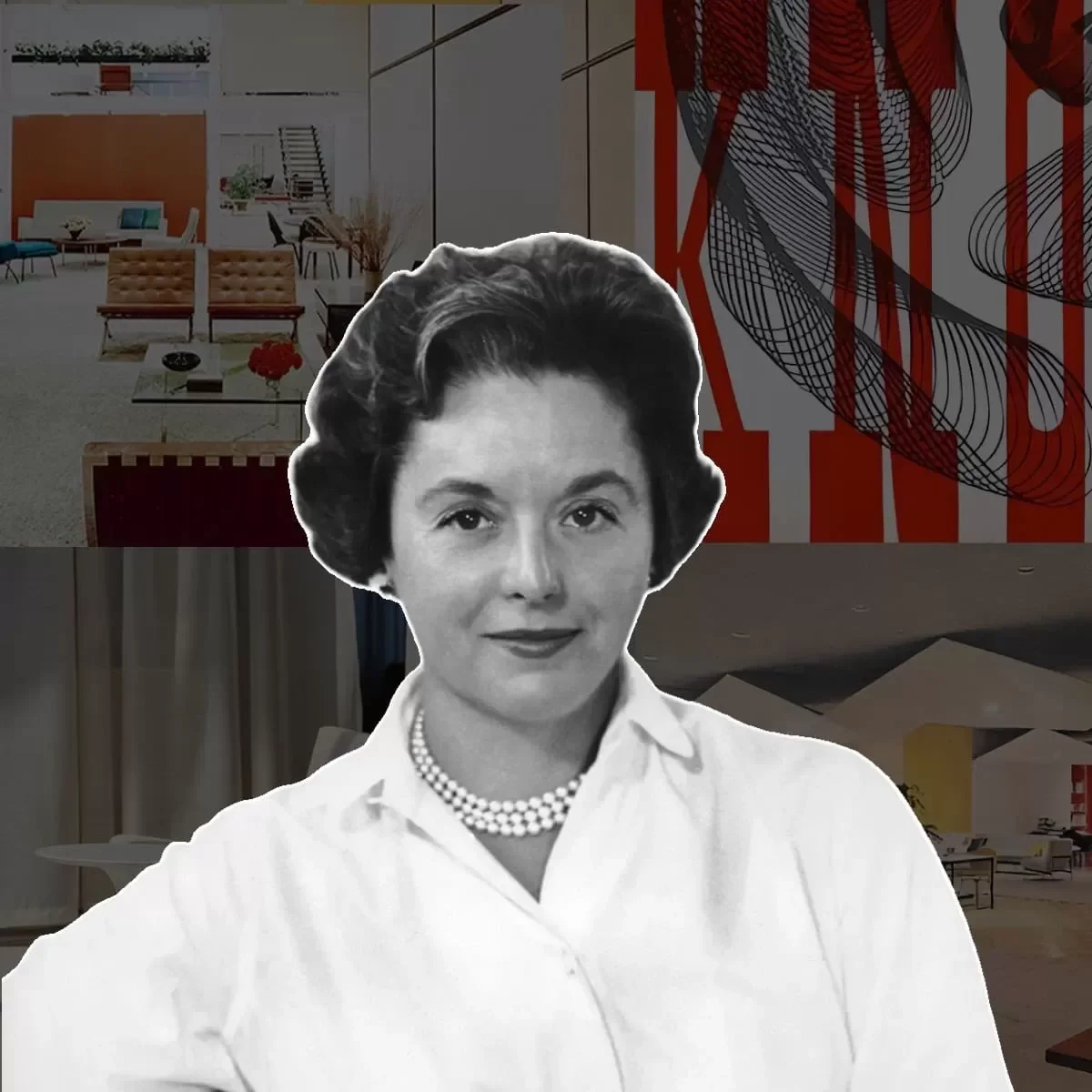
Florence Knoll: Modernist Furniture and Interior Pioneer
When I started researching modernist furniture, one name kept surfacing like a thread running through the whole movement—Florence Knoll. I first came across her while writing about Eero Saarinen. They were lifelong friends, went to Cranbrook together, and the more I learned, the clearer it became: Florence Knoll was the one shaping the space.

She helped build Knoll into more than a furniture company. She had the vision, the eye, and the discipline. Her influence is everywhere—her furniture, her interiors, her whole approach to design. Deliberate and completely assured, her work still feels current today.
A Brief Biography of Florence Knoll
Florence Knoll was born on May 24, 1917, in Saginaw, Michigan. She was orphaned by age 12.
She enrolled at Kingswood School in Bloomfield Hills and later studied at the Cranbrook Academy of Art. There, she met Eliel and Eero Saarinen, who became lifelong mentors and friends.

Florence also studied architecture in Chicago under Mies van der Rohe. She earned a degree in architecture from the Illinois Institute of Technology.
In the early 1940s, she moved to New York and began working with Hans Knoll. The two married in 1946.
Florence transformed Knoll from a furniture company into a full-scale interior design firm. She pioneered the concept of the “total design,” overseeing everything from furniture to textiles to space planning.
Florence Knoll collaborated with some of the most influential designers of the 20th century, helping shape Knoll’s modernist identity. This included Ludwig Mies van der Rohe, Eero Saarinen, Marcel Breuer, Harry Bertoia, and Jens Risom. Isamu Noguchi’s Cyclone Table, originally conceived as a rocking stool, added sculptural flair to the catalog.
Her own furniture designs were understated, functional, and refined. She believed furniture should complement the architecture, not compete with it.

After Hans Knoll’s death in a car crash in 1955, she led the company solo. She stepped down from day-to-day operations in the late 1960s.
Florence Knoll died on January 25, 2019, in Coral Gables, Florida. She was 101.
Major Pieces by Florence Knoll — Designs With a Backstory
Florence Knoll Sofa and Lounge Chair (1954)
These pieces weren’t born out of some grand artistic impulse—Florence literally needed something that fit into her perfectly gridded interiors. So she made her own. At one point, over a third of Knoll’s entire catalog was her work, and the Lounge Collection set the tone: clean, tailored, and ruthlessly balanced. Mies van der Rohe’s teachings are all over these pieces—especially that steel frame and the no-nonsense geometry.


Florence Knoll Bench (1954)
Florence Knoll modestly referred to this as one of the “fill‑in pieces nobody else wanted to design.” But did you know that what started as a practical afterthought became a mid-century classic? Crafted with a chrome steel frame and individually sewn leather squares, the 1954 Florence Knoll Bench delivers architectural precision combined with a spare, sculptural elegance—totally in sync with her Planning Unit philosophy.

Florence Knoll Executive Desk (Model 2480, circa 1961)
Florence designed this desk for herself. She hated bulky executive furniture, so she created a sleek pedestal table with storage behind it. The proportions were so dialed in she measured everything to the sixteenth of an inch. It’s Mies-inspired, but 100% hers—smart, efficient, and subtly commanding. You’ll still see it used as a dining table in high-design homes.

Florence Knoll Credenza (early 1960s)
If you’ve ever seen a Knoll credenza topped with marble and thought, “I need that,” you can thank Florence. She wanted something that could organize a corporate mess without looking like office furniture. The result is still one of the most copied storage designs out there—equal parts elegance and function.

Florence Knoll Coffee Table (mid-1950s)
This table was never supposed to stand out. That was the whole point. It was meant to blend in with her lounge seating and let the architecture speak. But the proportions are so clean and the materials so sharp, it somehow still grabs attention.

Model 31 Chair/Model 33 Sofa (late 1950s–60s)
These aren’t as famous, but they’re classic Knoll—lightweight, strong, and adaptable. Florence wanted pieces that could move fluidly between offices and homes, and these chairs did exactly that. They also became a favorite for custom upholstery, which says a lot about how well they hold their shape.


How to Use Florence Knoll Pieces in Interiors
Florence Knoll didn’t design furniture to be flashy—but her pieces still manage to hold their own. They’re clean, intentional, and built to support the space around them. I pulled together a handful of real-life interiors—from offices to living rooms to sleek little corners—that show how her designs can work in different settings. Hopefully, there’s something here that gets your wheels turning.


Timeline: Key Milestones in Florence Knoll’s Career
- 1917 – Born on May 24 in Saginaw, Michigan. Orphaned at age 12.
- 1932 – Enrolls at Kingswood School and later Cranbrook Academy of Art, where she meets the Saarinens.
- Late 1930s – Studies under Mies van der Rohe in Chicago; graduates from the Illinois Institute of Technology.
- 1941 – Moves to New York and begins working with Hans Knoll.
- 1943 – Helps create the Knoll Planning Unit, changing the direction of corporate interiors.
- 1946 – Marries Hans Knoll; Knoll Associates is officially formed.
- 1954 – Introduces the Lounge Collection, including the sofa and chair still in production today.
- 1955 – Hans Knoll dies; Florence takes over full leadership of the company.
- 1965 – Receives the AIA Gold Medal for Industrial Design.
- 2019 – Passes away on January 25 in Coral Gables, Florida, at age 101.
Final Thoughts on Florence Knoll
I’m so glad I followed that thread from Eero Saarinen and took a deeper dive into Florence Knoll. Realizing how many interiors, systems, and furniture designs she’s actually responsible for gave me a whole new level of respect. What a career. What a life. She’s easily one of the most important figures in the Mid-Century Modernist movement—period.
Sources & Further Reading
- Florence Knoll – Wikipedia
- Knoll Furniture: 1938-1960
- https://www.knoll.com/designer/Florence-Knoll
- https://www.knoll.com/design-plan/about-knoll
- Cyclone Dining Table – Knoll Product Page
- Noguchi Cyclone Table History – Peter Pawlak Design Studio
- Knoll, Inc. – Wikipedia
- Remembering Florence Knoll – PBS
- Knoll’s 80-Year Legacy – Architectural Digest